Unveiling Kasseri: Greece's Protected "Golden One"
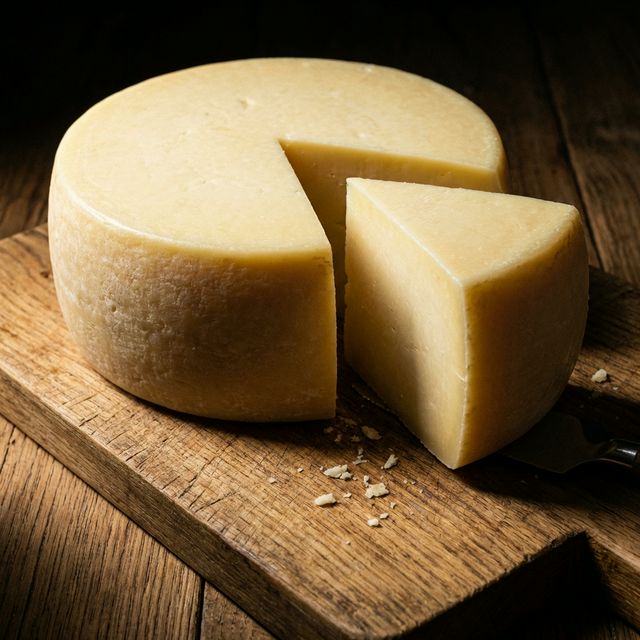
It is the unsung hero of the Greek table. While Feta claims the global spotlight, Kasseri (Κασέρι) remains the connoisseur's choice—a semi-hard, pale yellow cheese with a history as rich as its flavor.
A Protected Heritage (PDO Status)
Authentic Kasseri is not just a style of cheese; it is a legally protected product. In 1996, it was granted Protected Designation of Origin (PDO) status by the European Union. This means that for a cheese to carry the name "Kasseri," it must strictly adhere to traditional production methods and originate from specific regions:
- Thessaly
- Macedonia (Greek)
- Lesbos
- Xanthi
Any "Kasseri-style" cheese produced outside these areas is simply an imitation.
The Milk: Sheep First, Always
The soul of Kasseri lies in its milk. By law, it must be produced primarily from sheep's milk. A small amount of goat's milk is permitted (never exceeding 20%), but cow's milk is strictly forbidden. This gives Kasseri its distinctive profile:
"Rich, buttery, and slightly salty, with a sweet aftertaste that lingers. As it ages, it develops a piquant complexity that rivals the best Italian Pecorinos."
How It Is Made: The "Pasta Filata" Connection
Kasseri belongs to the pasta filata (spun paste) family of cheeses, similar to Italian Provolone or Mozzarella, but with a uniquely Greek twist. The curd is scalded, kneaded, and stretched to create a fibrous, elastic texture. This process is what gives Kasseri its legendary melting capabilities.
After stretching, the cheese is hand-formed into heads and aged for a minimum of three months. During this time, the texture transforms from rubbery to firm, and the color deepens to a pale straw yellow.
Did You Know?
The name "Kasseri" is derived from the Turkish word kaşer, which itself comes from the Hebrew kosher (meaning fit or proper). It reflects the deep multicultural history of the Balkans and the shared culinary traditions of the region.
Nutritional Profile
As a sheep's milk cheese, Kasseri is nutrient-dense. It is a significant source of:
- Protein: High quality casein protein essential for muscle repair.
- Calcium: Vital for bone health (one serving contains nearly 20% of your daily needs).
- Fats: While high in fat, it contains beneficial fatty acids found in sheep's milk that are easier to digest for some than cow's milk.
How to Enjoy It
While famous for Saganaki, young Kasseri serves beautifully as a table cheese. For more inspiration, check out our guide on 10 ways to eat Kasseri beyond frying.
Serve it at room temperature with:
- Crisp bread or koulouri
- Kalamata olives
- Slices of tart apple or pear
- A glass of chilled Assyrtiko wine